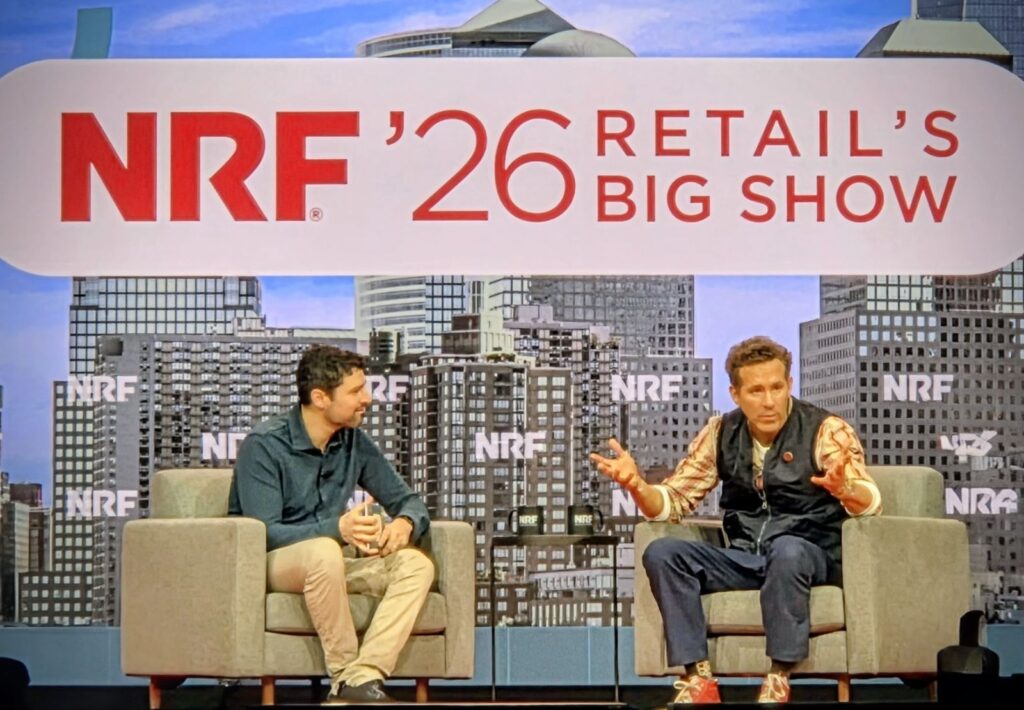
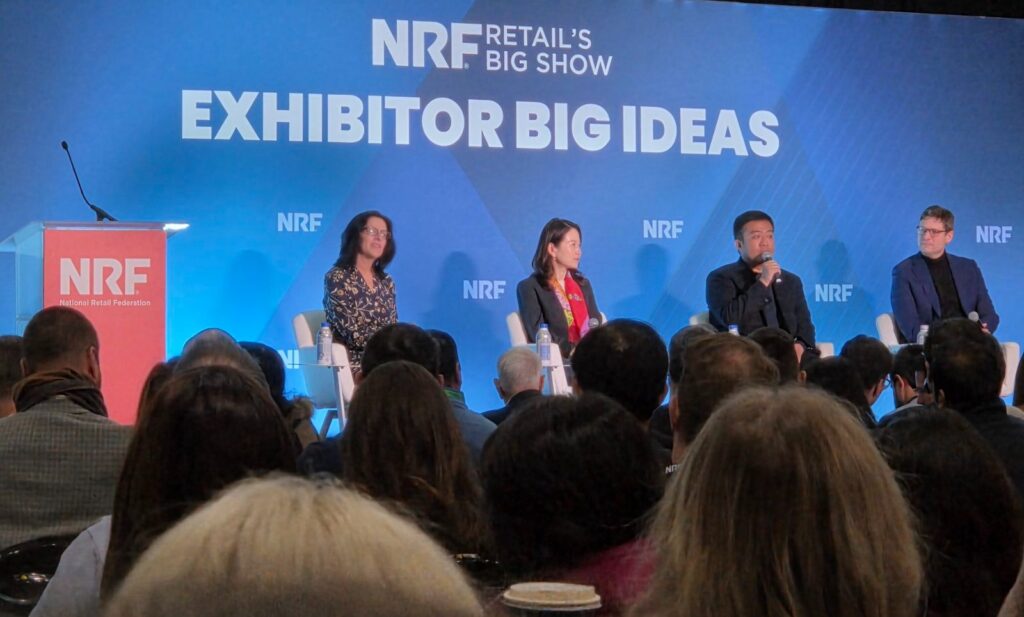
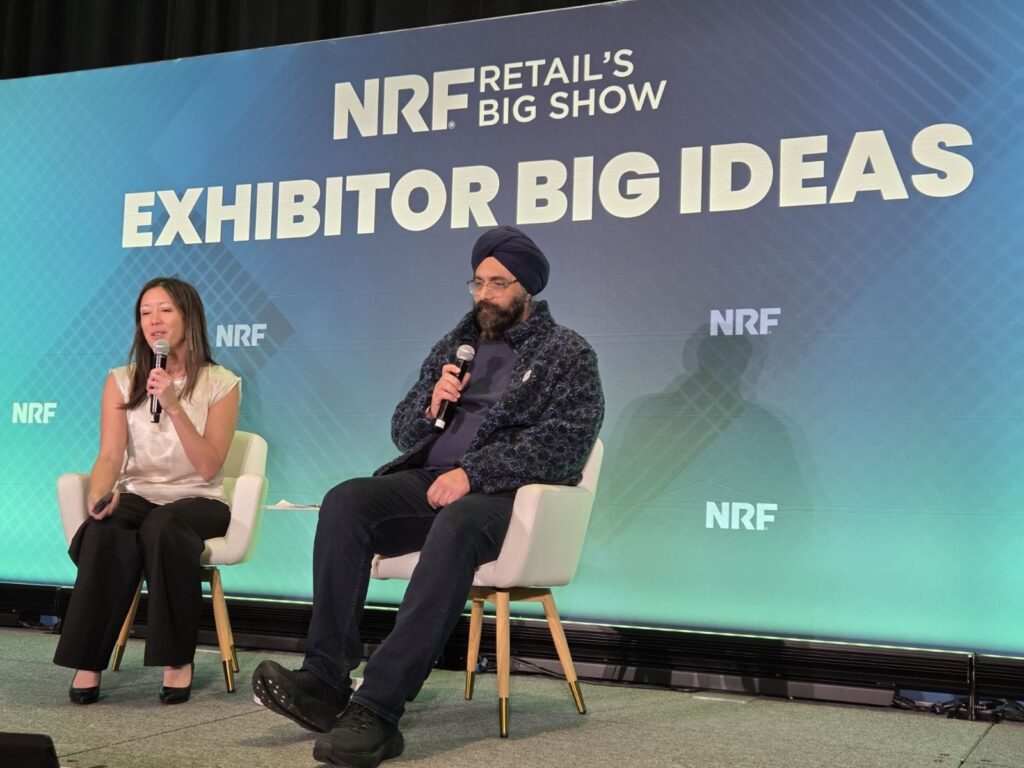
Every January, NRF Retail’s Big Show offers a snapshot of where retail stands and where it is heading next. NRF 2026 stood out because the industry tone had clearly shifted.
Retail leaders were no longer debating whether AI belongs in retail. That question is settled. The focus this year was on how AI is deployed, how it fits into operations, and how impact is measured. Conversations centered on how AI performs under real business constraints, from cost pressure and consumer trust to operational efficiency and scale.
NRF 2026 was less about future promise and more about present execution.
Across sessions, keynotes, and the expo floor, the conversation shifted toward practicality. Leaders focused on what is live today, what is scaling across the business, and what is delivering measurable results.

Meet with our experts to talk through real retail AI challenges and what it takes to move from pilots to production.
The headline shift: Agentic commerce is moving from concept to capability
One of the most defining themes of NRF 2026 was the rise of agentic commerce. This concept appeared across discussions on conversational shopping, AI assistants, and decision support embedded across channels.
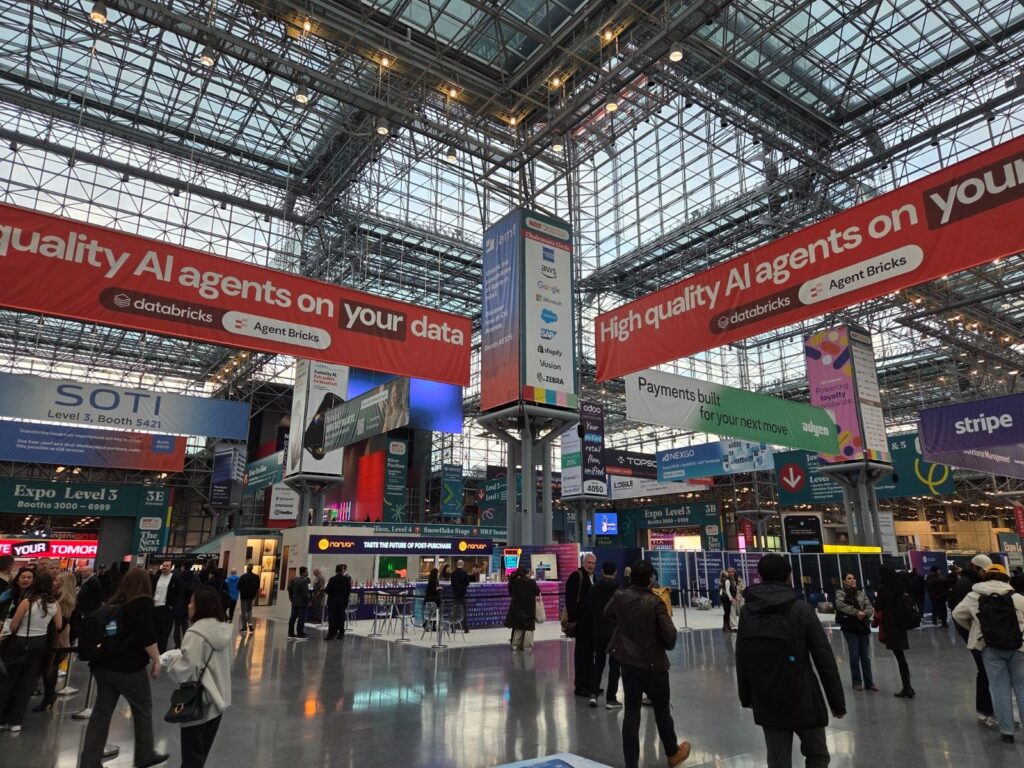
Agentic commerce goes beyond responding to customer inputs. These systems help guide discovery, support evaluation, and move customers toward action.
Several on-the-ground conversations at NRF 2026 focused specifically on how agentic AI is beginning to operate at the user interface level. Attendees discussed AI not just answering questions, but actively browsing product catalogs, narrowing options, and supporting purchase decisions on behalf of customers.
What changed this year was the level of specificity.
Retailers were not asking what agentic AI is. They were asking what it takes to support it.
Key readiness themes discussed at NRF 2026:
- Clean, structured product and pricing data
- Accurate inventory and availability signals
- Clear rules for recommendations and actions
- Governance for AI driven decisions
Agentic commerce is not a front end feature. It is a system readiness problem.
What this means for retailers
Retailers that invest in data quality and orchestration now will be better positioned as AI assisted shopping becomes more common.
The utility cycle has begun: Retail AI is being judged by deployment and ROI
Previous NRFs were filled with pilot programs and proofs of concept. NRF 2026 marked a clear break from that phase.
This year, success was defined by:
- What is in production
- How fast it was deployed
- Whether it delivers measurable impact
Retail leaders repeatedly emphasized frustration with:
- Disconnected AI tools
- Insights that cannot be operationalized
- Pilots that never move beyond testing
Instead, buyers are now prioritizing:
- Integration into existing workflows
- Faster time to value
- Clear ownership and accountability
- ROI that can be explained to the business
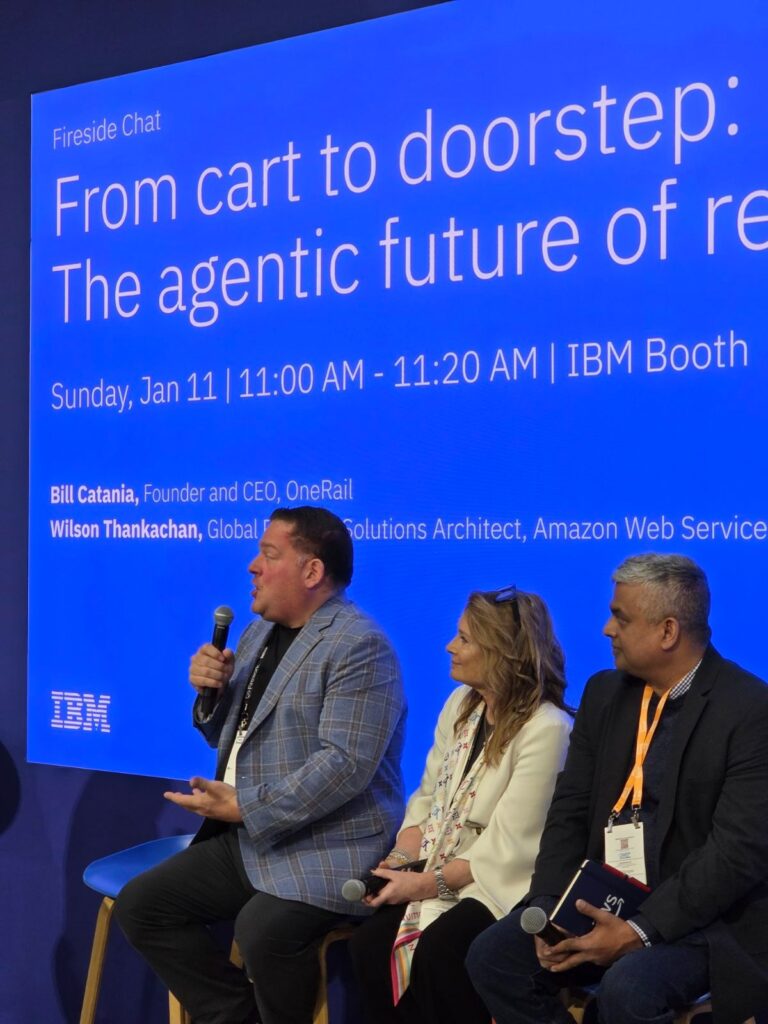
Logistics and inventory optimization surfaced repeatedly as areas where retailers feel immediate pressure to execute. Attendees referenced the need to better align demand signals, inventory positioning, and fulfillment decisions as margins tighten and planning cycles shorten.
Shipping became the new signal of innovation.
Bottom line
AI is now treated as operational infrastructure. Tools that do not fit into real decision cycles are increasingly deprioritized.
AI is the tool, but people are still the product
Despite the heavy focus on technology, NRF 2026 consistently returned to a people centered view of retail.
Associates, frontline teams, and service staff were discussed as core to differentiation, not costs to eliminate.
Common people first AI use cases included:
- Associate copilots for faster answers
- Intelligent task prioritization
- AI assisted training and onboarding
- Decision support for store managers
Retail leaders also emphasized trust. As AI becomes more visible to customers, transparency and responsible use matter more than ever.
Several attendee discussions highlighted growing sensitivity around privacy, particularly when AI intersects with payments and data transactions. Retailers acknowledged that trust can be lost quickly if personalization or automation oversteps at the point of purchase.
AI should amplify human judgment, not replace it.
Why this matters
Retailers that deploy AI in ways that support people are more likely to see adoption, trust, and sustained value.
Unified commerce is the execution framework
Another strong theme at NRF 2026 was unified commerce. This goes beyond omnichannel experiences and focuses on connected systems across the organization.
Retailers highlighted challenges caused by:
- Fragmented customer data
- Disconnected inventory systems
- Conflicting metrics across teams
Unified commerce was positioned as the foundation that allows AI to scale.
Key unification priorities discussed:
- Shared data models
- Standardized metrics and KPIs
- Fewer point solutions
- Platforms that orchestrate decisions across functions
Cost efficiency came up frequently in these conversations, with retailers linking unification efforts directly to the need to simplify operations, reduce duplication, and operate more efficiently in a constrained economic environment.
AI insights only matter if they can be acted on.
Practical takeaway
Retailers are moving toward incremental unification, starting with high impact areas like pricing and inventory, then expanding outward.
Discovery is changing: From search to conversational shopping journeys
NRF 2026 made it clear that product discovery is evolving.
Keyword based search is no longer sufficient on its own. Customers increasingly expect experiences that understand intent, preferences, and context.
Retailers discussed:
- Conversational discovery interfaces
- AI driven recommendations
- Assisted shopping journeys
- Personalization across channels
This shift elevates the importance of product data.
What now matters more than ever:
- Rich attributes and metadata
- Consistent descriptions across channels
- Content structured for AI interpretation
As AI plays a more active role in guiding discovery, retailers are increasingly aware that these systems influence not just what customers see, but how brands are perceived and choices are framed.
Your product catalog is becoming your AI storefront.
Why this matters
Discovery optimization is no longer just an SEO problem. It is an AI optimization problem.
In store intelligence is scaling, but scrutiny is rising
Physical retail remains central, and NRF 2026 showcased how much intelligence is now layered onto stores.
Use cases discussed included:
- Traffic and dwell analysis
- Conversion measurement
- Staff optimization
- Loss prevention and shrink reduction
At the same time, retailers acknowledged rising scrutiny around privacy and trust.
Key considerations raised:
- Data anonymization
- Clear customer boundaries
- Responsible use of vision and sensor data
These discussions reflected broader concern about balancing insight with responsibility, especially as sensing technologies become more advanced and more closely tied to individual behavior.
Insight without trust is a liability.
What this signals
The next phase of in store intelligence will be defined as much by governance as by capability.
The new retail AI checklist for 2026 planning
NRF 2026 also surfaced a more disciplined approach to AI investment. Retail leaders repeatedly returned to a small set of practical questions.
Before investing, teams are now asking:
- Does this integrate with how we work today
- Are our data foundations ready
- How fast can this move to production
- Who owns the outcome
- How will we measure success
Retailers also emphasized prioritization.
Rather than tackling everything at once, successful teams:
- Focus on a few high impact use cases
- Define success criteria early
- Plan for rollout from day one
The pilot graveyard is no longer acceptable.
What NRF 2026 signals for retail leaders
Shift ownership of AI from innovation teams to operators
One of the strongest undercurrents at NRF 2026 was a quiet but meaningful change in ownership. AI is moving out of innovation labs and into the hands of operators who are accountable for pricing, inventory, stores, and customer experience. This changes how success is defined. Instead of experimentation milestones, leaders are now expected to deliver operational outcomes.
Retail organizations that treat AI as an operating capability rather than an innovation initiative will move faster and see clearer returns. This requires changes in governance, resourcing, and incentives, not just technology choices.
Redesign decision workflows before adding more tools
NRF 2026 made it clear that many retail teams are surrounded by insights but still struggle to act. The problem is not intelligence, but workflow design. AI that delivers recommendations without a clear path to execution often creates friction rather than value.
Retail leaders should focus on how decisions flow through the organization. Where does information enter. Who acts on it. What approvals exist. AI investments that simplify and accelerate these flows are more valuable than those that simply add another dashboard.
Meet with our experts to talk through real retail AI challenges and what it takes to move from pilots to production.
Treat data readiness as a competitive advantage, not a technical task
Data quality and structure surfaced at NRF 2026 as differentiators, not hygiene factors. Retailers with well organized product data, pricing logic, and inventory signals are able to move faster as AI capabilities expand. Others are forced into expensive cleanup projects that slow adoption.
Leaders should elevate data readiness from a background IT concern to a strategic priority. The ability to support AI led discovery and decisioning depends on it.
Prepare for AI to influence customer choice, not just personalization
At NRF 2026, AI was increasingly discussed as a system that shapes customer decisions, not just personalizes experiences. This has implications for merchandising, brand, and trust. When AI recommends products, it becomes part of the brand experience.
Retail leaders need to define guardrails around how AI influences visibility, assortment, and choice. This is as much a brand decision as a technical one.
Build speed through simplification, not transformation
Many NRF 2026 discussions challenged the assumption that speed requires large scale transformation. Retailers are finding that the fastest progress comes from removing friction, consolidating systems, and aligning teams rather than launching multi year programs.
The signal for 2026 is to prioritize simplification. Focus on fewer initiatives that ship, integrate, and deliver impact. Momentum comes from execution, not complexity.
Bottom line
NRF 2026 confirmed that retail has moved decisively from vision to follow through. AI, agent-led commerce, and unified systems are no longer emerging ideas. They are operating expectations that influence how technology decisions are made and how success is measured.
For retail leaders, the opportunity in 2026 lies in execution discipline, especially as cost sensitivity, trust expectations, and buyer behavior continue to tighten across the market. The retailers that win will be those that integrate intelligently, support people, earn trust, and deliver results at speed without introducing unnecessary complexity.
Want guidance from an AI expert on how to implement AI in your business? Contact Fusemachines today!